Artificial Intelligence has changed dramatically in recent years. One of the technologies behind this transformation is the Large Language Model, commonly known as an LLM.
LLMs are the foundation of many modern AI applications that can understand and generate human language. They are used in chatbots, coding assistants, content-generation tools, research applications, customer-support systems, and many other solutions.
What Is an LLM?
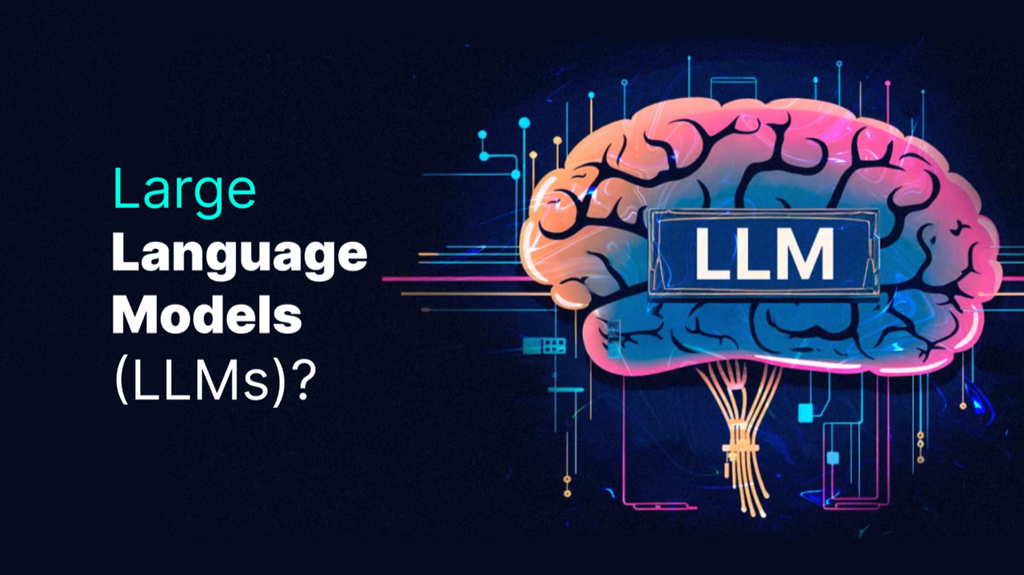
A Large Language Model (LLM) is an artificial intelligence model designed to understand and generate human language.
It learns patterns from very large collections of text and uses those learned patterns to generate responses to user prompts.
For example, an LLM can be used to:
- Answer questions
- Generate text
- Summarize information
- Translate languages
- Write and explain code
- Generate ideas
- Analyze text
- Assist with research
- Power AI applications
The word “large” generally refers to the scale of the model and the amount of data and computational resources involved in developing it.
How LLMs Are Used
An LLM receives an input, commonly called a prompt, processes it, and generates an output.
For example:
User: Explain machine learning in simple terms.
LLM: Machine learning is a branch of AI that allows computers to learn patterns from data and make predictions or decisions.
The quality and usefulness of the output can depend on the model, the available context, and the instructions provided by the user or application.
LLMs and Generative AI
LLMs are an important part of Generative AI.
Generative AI refers to AI systems capable of creating new content. In the case of language models, that content is primarily text, although modern AI systems can also work with other types of information.
LLMs can therefore become the language-processing component of larger AI applications.
LLMs in AI Applications
LLMs can be integrated into applications rather than being used only as standalone chatbots.
For example, an application can use an LLM together with:
LLM + Database + APIs + Tools + RAG = AI Application
This allows developers to build systems that can retrieve information, interact with external services, and perform useful tasks.
LLMs and RAG
One limitation of a standalone LLM is that its response is based on the information and capabilities available to the model.
Retrieval-Augmented Generation (RAG) can provide an application with relevant external information.
A RAG application can retrieve information from documents or a knowledge base and provide that information to the LLM as context before generating a response.
This makes LLMs useful for applications such as:
- Document assistants
- Knowledge-base chatbots
- PDF question-answering systems
- Research assistants
- Enterprise information systems
LLMs and AI Agents
LLMs can also serve as the reasoning and language component of AI agents.
An AI agent can combine an LLM with tools and actions to accomplish tasks.
For example, an agent could potentially:
- Understand a user’s request
- Decide what action is needed
- Use an available tool
- Process the result
- Produce a final response
This is one of the foundations of modern agentic AI.
Why LLMs Matter
LLMs have made it possible to interact with computers using natural language.
Instead of requiring users to learn complicated commands or interfaces, applications can allow users to describe what they need in ordinary language.
This has opened opportunities across software development, education, research, business, automation, and many other fields.
Limitations of LLMs
LLMs are powerful, but they are not perfect.
They can sometimes:
- Generate incorrect information
- Misinterpret ambiguous questions
- Produce outdated information
- Generate convincing but unsupported answers
- Make mistakes in reasoning or calculations
Therefore, important information should be verified, and AI applications should be designed with appropriate safeguards.
LLMs in My Technology Journey
Learning about LLMs is an important part of my journey into Generative AI and agentic application development. It helped me understand how modern AI applications can move beyond traditional machine-learning models and interact with users through natural language.
Large Language Models have become a fundamental technology in modern Generative AI.
They provide the language capabilities behind many AI applications, while technologies such as RAG, tools, vector databases, and AI agents can extend what those applications can accomplish.
As AI continues to evolve, understanding LLMs provides an important foundation for anyone interested in building modern AI systems.